
by folkbum
I am deeply disappointed that in this morning's paper (yeah, I'm behind) not only does the Journal Sentinel's editorial "our view" push, hard, the MMAC takeover/ dismantling of the Milwaukee Public Schools, but they tossed the opposing view to George freakin' Mitchell to claim the MMAC's plan doesn't go far enough.
George. Mitchell.
There's a lot of disingenuity in the MMAC's plan--like shuttling the worst 20,000 MPS students into their own district while saving the better students for MMAC's magic pony and charter school farm. But that alone is less upsetting than the Journal turning over prime op-ed real estate not to someone interested in saving MPS, but rather to one of the great architects of Milwaukee's stunningly mediocre school-voucher experiment.
Was there no one in the Journal's rolodex to the left of Milton Friedman? Terry Falk not available? (That I don't believe.) And, hey, they know where I hang out--and nothing.
The question I have for MMAC is this: Where are the jobs? They're the business folk, right? Maybe they've heard about this unemployment thing we have going on. Milwaukee has better than 8% unemployment. More than a third of African American men here are unemployed. Good family-supporting jobs are disappearing from the public and private sectors without replacement. And study (pdf) after study shows clearly that high unemployment--and prolonged unemployment--have deleterious effects on educational achievement. Poverty is the one consistent indicator of poor student performance.
Yet the MMAC twiddles its thumbs, plotting how to burn Milwaukee's public schools, and the Journal provides the kindling.
Showing posts with label Milwaukee Public Schools. Show all posts
Showing posts with label Milwaukee Public Schools. Show all posts
Tuesday, November 15, 2011


Friday, November 11, 2011
Some initial thoughts on the proposed MPS health-care benefit changes
by folkbum
In short--and, as I'm up waaay past my bedtime, short is what you get--the devil is in the details.
The changes are summarized in the blue book for next Tuesday's meeting, available, here (pdf), and more thoroughly in this attachment (pdf, including a lot of annoying sideways pages). The district is offering two briefing sessions at Central Office on Monday prior to Tuesday's Board meeting (at 4:00 and 6:00), where presumably all this will be hashed out.

But here's what it looks like: Steep jumps in premiums for either plan, the PPO or the EPO (HMO), and steeper jumps in out-of-pocket costs for both plans. Indeed, the deductibles for the cheaper EPO plan, for example, increase ten times their present amount under the proposal.

The changes in premiums are not unreasonable by themselves. Under the current contract, teachers are paying 1% (single) or 2% (family) of their salary as a premium; here, the premium for most teachers would be either 12% or 14% of the plan cost. The current salary deductions for an average teacher earning $55,000 in base pay add up to about 5% of the plan cost; the change would hit younger teachers harder because the premium shifts from percentage of salary to percentage of the plan cost. And the difference in premium between the EPO and PPO is totally worth it for having broader choice of providers.
But combined with sharp increases in deductibles and out-of-pocket fees, the changes become significantly unreasonable. In the grand scheme, this is because the US health care system is full of crap, providing mediocre quality care at prices the rest of the world just doesn't have to endure, of course, and there's little any one of us can do to change that. But if this goes through, combined with changes to how pensions are calculated, and even assuming no other changes or reductions to the salary schedule after the contract expires in June 2013, teachers in MPS can expect 10%-20% less take-home pay, depending on what their salary is now.
Remarkably, many people will insist that this--like layoffs--is good for the local economy.
(As an aside: I wouldn't be surprised, even given this and the presentation of the facilities master plan report, if the most contentious item on the Board's agenda for Tuesday is the proposed changes to food service.)
In short--and, as I'm up waaay past my bedtime, short is what you get--the devil is in the details.
The changes are summarized in the blue book for next Tuesday's meeting, available, here (pdf), and more thoroughly in this attachment (pdf, including a lot of annoying sideways pages). The district is offering two briefing sessions at Central Office on Monday prior to Tuesday's Board meeting (at 4:00 and 6:00), where presumably all this will be hashed out.
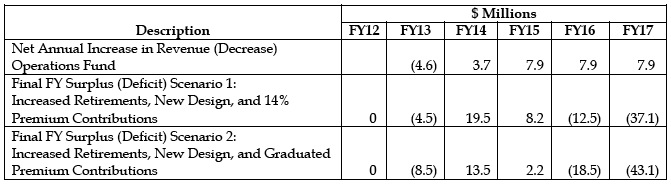
But here's what it looks like: Steep jumps in premiums for either plan, the PPO or the EPO (HMO), and steeper jumps in out-of-pocket costs for both plans. Indeed, the deductibles for the cheaper EPO plan, for example, increase ten times their present amount under the proposal.

The changes in premiums are not unreasonable by themselves. Under the current contract, teachers are paying 1% (single) or 2% (family) of their salary as a premium; here, the premium for most teachers would be either 12% or 14% of the plan cost. The current salary deductions for an average teacher earning $55,000 in base pay add up to about 5% of the plan cost; the change would hit younger teachers harder because the premium shifts from percentage of salary to percentage of the plan cost. And the difference in premium between the EPO and PPO is totally worth it for having broader choice of providers.
But combined with sharp increases in deductibles and out-of-pocket fees, the changes become significantly unreasonable. In the grand scheme, this is because the US health care system is full of crap, providing mediocre quality care at prices the rest of the world just doesn't have to endure, of course, and there's little any one of us can do to change that. But if this goes through, combined with changes to how pensions are calculated, and even assuming no other changes or reductions to the salary schedule after the contract expires in June 2013, teachers in MPS can expect 10%-20% less take-home pay, depending on what their salary is now.
Remarkably, many people will insist that this--like layoffs--is good for the local economy.
(As an aside: I wouldn't be surprised, even given this and the presentation of the facilities master plan report, if the most contentious item on the Board's agenda for Tuesday is the proposed changes to food service.)
Thursday, November 10, 2011
Some initial thoughts on the MPS long-range master facilities plan
by folkbum
My "beat" when I write about education here in Milwaukee tends to be Bay View and the Bay View-adjacent areas (plus, I teach at Bay View Middle and High School), so when the district's long-range master facilities plan report (pdf) (shorter executive summary here, pdf) went live earlier tonight, I immediately scanned through for the impact on Bay View and Bay View-adjacent schools. The short answer on that front? None. No Bay View schools are recommended for any closure or movement in year one of the plan.

The caveat being that the plan doesn't list any specific recommendations for schools in years 2-10, just general numbers like "open 2 elementary schools" or "close 6-9 secondary schools." After year one, in other words, schools in my "beat" may be on the table.
What's on the table in year one, though, is this (links to MPS school pages for reference):
But one major thing strikes me about the report and its recommendations, which is that the closures and movements recommended for year one actually do not address the excess capacity MPS already faces. The report identifies an excess capacity right now of more than 9000 student seats (assuming 90% capacity utilization as optimum) but cuts capacity by barely anything at all. This is in part because the plan expands some programs and creates a whole new 6-12 Montessori program (1250 projected students enrolled). In essence, while some elementary seats do disappear, others shift around and new seats open up at the 6-12 level. This creates an issue for years two through ten when additional seats will need cutting to make up for the ones created in year one.
I know some of this is because MPS is lopsided, with half-empty programs where they don't need to be and schools stuffed to the gills in other parts of the city that need relief. But at this time of budget crunch--more in my next post!--any opportunity to cut more wasteful costs should be seized.
My "beat" when I write about education here in Milwaukee tends to be Bay View and the Bay View-adjacent areas (plus, I teach at Bay View Middle and High School), so when the district's long-range master facilities plan report (pdf) (shorter executive summary here, pdf) went live earlier tonight, I immediately scanned through for the impact on Bay View and Bay View-adjacent schools. The short answer on that front? None. No Bay View schools are recommended for any closure or movement in year one of the plan.
The caveat being that the plan doesn't list any specific recommendations for schools in years 2-10, just general numbers like "open 2 elementary schools" or "close 6-9 secondary schools." After year one, in other words, schools in my "beat" may be on the table.
What's on the table in year one, though, is this (links to MPS school pages for reference):
- CLOSE 65th St. School, 68th St. Early Childhood Center, Burroughs Middle School, Kosciuszko Montessori School, LaFollette Elementary School, and Carver Academy.
- MOVE Wisconsin Conservatory of Lifelong Learning to the Sarah Scott building, Garland (as a Montessori K-8) to the WCLL building, Hayes Bilingual (as a K-8) to the Kosciuszko building, and MacDowell Montessori (as a K-12) to the Juneau Campus (possibly supplanting the Montessori High School program already there, but that's not clear).
- ADD Montessori programs in the Carver building (4-8; Maryland Ave. will become a K3-3 that feeds it) and a 6-12 Montessori program in the Milwaukee Education Center building.
But one major thing strikes me about the report and its recommendations, which is that the closures and movements recommended for year one actually do not address the excess capacity MPS already faces. The report identifies an excess capacity right now of more than 9000 student seats (assuming 90% capacity utilization as optimum) but cuts capacity by barely anything at all. This is in part because the plan expands some programs and creates a whole new 6-12 Montessori program (1250 projected students enrolled). In essence, while some elementary seats do disappear, others shift around and new seats open up at the 6-12 level. This creates an issue for years two through ten when additional seats will need cutting to make up for the ones created in year one.
I know some of this is because MPS is lopsided, with half-empty programs where they don't need to be and schools stuffed to the gills in other parts of the city that need relief. But at this time of budget crunch--more in my next post!--any opportunity to cut more wasteful costs should be seized.
Tuesday, October 04, 2011
What flavor, and will there be ice cream?
by folkbum
An actual email from the Milwaukee Public Schools department of professional development (click to embiggen):

An actual email from the Milwaukee Public Schools department of professional development (click to embiggen):

Tuesday, September 20, 2011
Milwaukee parents choosing public schools, still
by folkbum
Third Friday, the big student-count day, just passed in Wisconsin. The state's Republicans, led by Governor Scott Walker and legislators like Alberta Darling, did everything they could to make the Milwaukee Public Schools a less-attractive choice: blowing out the enrollment cap and income requirements for the voucher program, expanding charter school options, gutting the MPS budget and pitting its teachers against its community. The prediction was MPS would lose between four and five thousand kids, or a 5% drop.
Reality? According to Board member Meagan Holman--I haven't seen this in the news yet--the total drop in enrollment was a mere 1%, about 800 students, which is actually low by recent trends.
Remarkably, Milwaukee's parents have seen the attacks on public education directed at us from Madison and AM radio and decided to stay. Good for them--and good for the schools, which find themselves in a better financial position than expected.
Third Friday, the big student-count day, just passed in Wisconsin. The state's Republicans, led by Governor Scott Walker and legislators like Alberta Darling, did everything they could to make the Milwaukee Public Schools a less-attractive choice: blowing out the enrollment cap and income requirements for the voucher program, expanding charter school options, gutting the MPS budget and pitting its teachers against its community. The prediction was MPS would lose between four and five thousand kids, or a 5% drop.
Reality? According to Board member Meagan Holman--I haven't seen this in the news yet--the total drop in enrollment was a mere 1%, about 800 students, which is actually low by recent trends.
Remarkably, Milwaukee's parents have seen the attacks on public education directed at us from Madison and AM radio and decided to stay. Good for them--and good for the schools, which find themselves in a better financial position than expected.
Thursday, July 28, 2011
In close vote, MTEA declines additional concessions
by folkbum
In a letter emailed to teachers today (which you can read here), MTEA president Bob Peterson gave the results of the survey:
But the closeness of this week's vote suggests that there is still room for compromise in the future, if we ever get the right to bargain collectively back. Currently, you might recall, it's against the law for the union and the district to meet and mutually discuss the employment conditions of Milwaukee's teachers.
I am disappointed by the vote, as I have been arguing for months that there are things teachers can give up that would save the district money without significant impact--a furlough day or two, dumping the "sweetener" supplemental pension--for both political and practical reasons. The superintendent--whose response you can read too--is not the enemy here; you can check the archives at his blog to see he agrees with me, and the union, in more diplomatic terms of course, about where the fault lies. Peterson's letter is pretty explicit, in fact, that a lot of teachers who might have voted yes commented that they didn't trust the current Republican leadership in the state and instead voted to protect themselves.
That right there is perhaps the worst damage that Walker and co. have done to the relationship between public employees and their employers. Not that long ago we willing made concessions to help the district and students, but now we feel we have to protect ourselves instead. Thanks, GOP.
In a letter emailed to teachers today (which you can read here), MTEA president Bob Peterson gave the results of the survey:
The survey showed that 52.4% of the membership opposed additional concessions and 47.5% favored them. Based on the results and the many thoughtful comments, the Executive Board decided to not pursue any additional concessions.Considering that last fall's vote, which involved far larger concessions than those considered this time around, was overwhelming in favor, I think it's clear that Milwaukee teachers feel first, that we're not opposed to giving back, but we also recognize that we have given quite a lot.
But the closeness of this week's vote suggests that there is still room for compromise in the future, if we ever get the right to bargain collectively back. Currently, you might recall, it's against the law for the union and the district to meet and mutually discuss the employment conditions of Milwaukee's teachers.
I am disappointed by the vote, as I have been arguing for months that there are things teachers can give up that would save the district money without significant impact--a furlough day or two, dumping the "sweetener" supplemental pension--for both political and practical reasons. The superintendent--whose response you can read too--is not the enemy here; you can check the archives at his blog to see he agrees with me, and the union, in more diplomatic terms of course, about where the fault lies. Peterson's letter is pretty explicit, in fact, that a lot of teachers who might have voted yes commented that they didn't trust the current Republican leadership in the state and instead voted to protect themselves.
That right there is perhaps the worst damage that Walker and co. have done to the relationship between public employees and their employers. Not that long ago we willing made concessions to help the district and students, but now we feel we have to protect ourselves instead. Thanks, GOP.
Sunday, July 24, 2011
Bay View Middle and High School listening session August 3
by folkbum
My regular readers know that I teach at Bay View Middle and High School (née Bay View High School). Which, while not MPS's best high school, is in fact what you might call the "best of the rest":
MPS itself seems to have the same idea: The new superintendent is pretty keen on Bay View, and seems willing to invest in the program. There is a new, young and optimistic principal coming in, and the new Board member representing Bay View, Meagan Holman, has made keeping Bay View strong a priority. In addition, there seems to be a new interest among neighborhood parents in getting involved and improving the school.
Which brings us to the listening session (the link is to a facebook even page). It's one of the first steps in the process of figuring out where to go next with Bay View. This is not a discussion about shutting it down and starting over, or anything like that; rather, it's about what to add to the existing success--the district's strongest construction program, music, Project Lead the Way, a growing AP program, and so on--to ensure lasting success at the school. What are your ideas? What's missing? We need to hear your voice.
Bay View Middle and High School Listening Session
Wednesday, August 3, 6-8 PM
BVMHS Auditorium
2751 S. Lenox St., in Milwaukee's Bay View neighborhood
My regular readers know that I teach at Bay View Middle and High School (née Bay View High School). Which, while not MPS's best high school, is in fact what you might call the "best of the rest":
Five Milwaukee comprehensive high schools have some sort of entrance requirement, and thus, naturally, have higher scores on the state test, Wisconsin Knowledge Concepts Examination (WKCE). Those schools are King, Reagan, Riverside, Milwaukee HS of the Arts, and Milwaukee School of Languages.I can't take credit for this--as a teacher of juniors and seniors, they've already taken the tests whence these scores come. However, I do care about making sure that Bay View continues to do well and improve.
A really successful school does not rely on sorting students but takes the students it is given and provides them with the best education possible.
Until recently, Hamilton High School called itself “the best of the rest” having the highest scores on the WKCE of the high schools not screening its incoming students. This year Bay View High School passed Hamilton on the WKCE. Hamilton did not slip so much as Bay View moved ahead being the only MPS high school to show measurable gains on the WKCE.
MPS itself seems to have the same idea: The new superintendent is pretty keen on Bay View, and seems willing to invest in the program. There is a new, young and optimistic principal coming in, and the new Board member representing Bay View, Meagan Holman, has made keeping Bay View strong a priority. In addition, there seems to be a new interest among neighborhood parents in getting involved and improving the school.
Which brings us to the listening session (the link is to a facebook even page). It's one of the first steps in the process of figuring out where to go next with Bay View. This is not a discussion about shutting it down and starting over, or anything like that; rather, it's about what to add to the existing success--the district's strongest construction program, music, Project Lead the Way, a growing AP program, and so on--to ensure lasting success at the school. What are your ideas? What's missing? We need to hear your voice.
Bay View Middle and High School Listening Session
Wednesday, August 3, 6-8 PM
BVMHS Auditorium
2751 S. Lenox St., in Milwaukee's Bay View neighborhood
Tuesday, July 05, 2011
[the title of this post is the sound of my head asploding]
by folkbum
My klout score is higher than James Wigderson's, so I suppose I could just let this slide and try to sleep tonight with an asploded head. But instead, let's catalogue the ways he gets wiggy with the facts instead. (A primer on this fisking can be found in this post.)
My klout score is higher than James Wigderson's, so I suppose I could just let this slide and try to sleep tonight with an asploded head. But instead, let's catalogue the ways he gets wiggy with the facts instead. (A primer on this fisking can be found in this post.)
- [W]hen MPS asked the union to make concessions in the pension plan to mitigate the loss of state and federal aid, the teachers union refused.
False. The district knew federal stimulus funds were drying up, and they predicted that a likely Republican majority in Madison would trim the expected increase in per-student funding. So they asked the union to make concessions and we did. - Protecting the benefits of the union’s most senior members will result in the unemployment of 200 of the union’s members with less seniority.
False. It is the near trillion-dollar gutting of public education--and shared revenue and other programs--by the GOP that is resulting in pink slips all over the state. - Last October, at the height of the race for governor, Thornton and the teachers union reached a tentative agreement on a contract through 2013. [. . .] Due to the health care contribution and a freeze in teacher pay for the first year, the estimated savings over the next two years was $50 million.
Again, a mangling of the facts. Base pay was frozen in that contract for two years, 2009-2010 and 2010-2011. The savings over 2011-2012 and 2012-2013 will be nearly $95 million. And in expectation that the federal money will end, a lot of positions funded by that were set to be eliminated. That's part of why there were 1000+ positions eliminated, but only about 500 announced layoffs. - [T]he contract agreement was at a time of a great fiscal crisis at the state level.
Additionally false. It has been pretty well documented that Wisconsin is not, in fact, broke. If we were broke, why would Scott Walker and the GOP be offeringhundreds of millionsbillions in tax breaks? - Now the school board and Dr. Thornton find themselves asking the teachers union to agree to the same pension contributions asked for by Walker. These contributions would be at the same level WEAC President Mary Bell said were never a problem, 5.8% of the teachers’ salaries. Of course the MTEA said no to Thorton’s request.
First, let's dispense with the newspeak. It's not a new pension contribution--the pension contribution doesn't change, as it is set by state law at 11.6%. (The state likes to guarantee minimum income to its top-notch pension program.) It's a 5.8% salary cut, is what it is, and I won't call it anything else. It says something about what Wiggy and his ilk believe about their own position that they lack the guts to come right out and say they think teachers are paid too much. Man up, James. Just say it.
But second, the union did not say no. The union said it would be happy to negotiate a salary give back once the power to negotiate was restored by the legislature.
For as much as Wiggy insinuates that unions should have known collective bargaining would disappear, he forgets that, you know, we were all watching, and it wasn't that long ago. No one, not a single legislator or administration employee, said a single word about making collective bargaining between public employees and their employers illegal. Period.
Further, when Mary Bell and other union leaders said unions would agree to the salary cuts, they said that's why you don't need to eliminate collective bargaining. If unions are allowed to sit down with employers and hammer out a deal, they will. Instead, the GOP ignored Bell and others making that offer--we'll agree to cuts so stop the attack on bargaining--and now they and Wiggy expect unions to still fold. There is a response to that I'd like to offer, but this is a family blog. (Though I will say, Wiggy is Gop in the puppy story.) - In the case of the Milwaukee teachers union, this is the same union that in 2010 was willing to let 480 teachers go rather than switch health care plans.
Switching health care plans would not have saved the kind of money the simple-minded media suggested it would. In addition, almost every single one of those teachers was recalled, after Dr. Thornton took a look at real needs and the actual budget available. He stood up for teachers when his predecessor would not. - This is also the same teachers union still fighting to get taxpayer-funded Viagra included in their prescription drug plans.
This is just a bald lie. - Surely some teachers [sic] jobs could be saved if they privatized food service, painting and other services and cut down on the Administrative bloat, for example.
False again. MPS food service runs a surplus, for example, and the budget this year makes larger cuts to administration, relatively, than to teaching. - Or, maybe MPS will see this as a good reason to sell off a few empty buildings.
What, does Wiggy not check the daily? Is his Bing broken? MPS is well on the way. In addition, the cost of those excess buildings is a pittance--barely ten teachers' worth.
Oh, and the title of Wigderson's piece: - Most MPS layoffs could have been avoided.
Why yes, yes they could have. But Wiggy's looking in the wrong place for blame. The GOP misdirected voters for an entire campaign season about their intentions for schools, for unions, and for the middle class in Wisconsin. He can't bring himself to be honest about that, either.
Sunday, July 03, 2011
Some stuff, we did know. It's what no one knew that is killing us.
by folkbum
Here's a comment from the thread below on MPS layoffs that encapsulates a common sentiment and that will serve as a good entree into this post, which I have been writing in my head for the last week or so:
In 2010, the Board hired a new superintendent, who came in July 1 intent upon having more of a clean slate to start his tenure, and who directed his people to get down to business and settle the contract. In October, the union and the district came to an agreement, and teachers and the Board ratified it soon after. This contract included many concessions by the teachers, including a pay freeze for two years (and, therefore, no back pay), a new drug plan, and contributions to health insurance costs. The magic benefit-to-salary ratio, which is the right's favorite talking point against MTEA, fell by nearly 7.5%. The contract was to cover not just 2009-2011, the two years that would have been covered if we'd settled by June 30, 2009, but also 2011-2013, which meant neither side had to immediately turn right back around and start re-negotiating for another contract.
Those of you with a rudimentary sense of chronology will be able to figure out that all of this, except the votes to approve the contract by both sides, happened prior to the 2010 election, in which Republicans won a majority of both state houses and the governorship.
Now, what the comment above refers to is the notion that MPS and MTEA should have known that "changes" would be coming to education in Wisconsin based on the November election results. There are a number of honest responses to this, the most basic of which is that neither the union nor the district had as its top concern the politics of the election; both sides simply wanted to not have to worry about having a lack of a contract over their heads.
But it would be dishonest to say that there was no attention paid to the politics. By October, when the agreement was reached, it was pretty clear that the election was not going to be good for schools. Tom Barrett had little chance of winning, the "enthusiasm gap" was real enough to mean that Democrats were better than even to lose one or both state houses. So you know what? Both sides, MPS and MTEA, tried to protect themselves from what they knew was coming.
Because we did, in fact, know things in October 2010. Scott Walker had an education platform, and it was this:
So when teachers went into the final stages of negotiation, we protected ourselves against the changes that we reasonably expected were coming: The contract maintains evaluation procedures and seniority rules, even though it changes some of the salary-advancement requirements. The contract freezes salary and lowers benefit costs, so it makes a possible switch back to the QEO more doable in the future. And it included changes to the health insurance program that makes joining the state health care plan less attractive for the administration.
At the same time as we teachers protected ourselves, the district wrung concessions from teachers that meant it could spend less in 2011-2012 than the then-statutory increase would have allowed. Figuring that as long as the increase was positive, even if it weren't $250 per student, the district could start the year on a sound footing with few if any layoffs--unlike what they had just gone through in the summer of 2010.
So what drops in February 2011? Not, absolutely not what's listed above. Walker's education platform did not say word one about slashing teacher salary by mandating minimum pension and insurance contributions. Walker did not suggest at all during the campaign that such a thing was coming. And the same is true for eliminating collective bargaining over everything but salary, limiting salary increases to the rate of inflation, and dissolving the unions and the protections that they provide. Not one single word of that was breathed during Walker's campaign--something that Walker has admitted to, since he is not so stupid that he would kill his chances of getting elected.
Further, Walker and Republicans absolutely did not campaign on slashing education spending statewide by nearly a billion dollars a year. I can guarantee you that if the GOP had walked around last fall telling parents and local school boards that they would be gutting the funds provided to schools, they would have lost in a landslide.
So in October of 2010, MPS and MTEA were looking at a contract that was going on two years expired, and both sides agreed that was too long. They were looking at specific and credible campaign promises from Republicans that would mean changes to the way they did business, and both sides agreed to solutions that addressed those promises.
In short, when the comment above asks why we didn't wait another four or six months or eight months until all the changes were settled law, we all, both sides, wanted to be proactive. We negotiated and approved a contract that not only saved the taxpayers money but accounted for the changes to education law that were promised to us by the governor-elect and his GOP majority.
And, worse, had we waited, we would not have been able to negotiate a contract at all! There was no reason to believe that once we did sign the contract, it would suddenly become illegal to re-open the contract for negotiation or work on a contract for 2013-2015 and beyond that responded to any additional changes that may come along. (It remains to be seen whether the contracts signed by other municipalities and districts after the effective date written in the budget repair bill can be challenged in court. The state's Department of Administration offered guidance that implementation of the changes should not begin until July 1, but when the state Supreme Court allowed the bill to take effect it did not change the language of the bill.)
So yes, commenters, we did know that there would be changes. And we accounted for them. It's what we didn't know--what no one knew until February 2011 because Walker and his minions deliberately hid their plans--that is killing MPS and causing additional layoffs. It's what we didn't know that is causing layoffs in districts and municipalities all across the state, and severe cutbacks in services. It's what no one knew that caused an uproar heard around the globe, nearly five months of daily protests at the Capitol, and unprecedented recall elections in all corners of the state.
So why should we point fingers at ourselves? MPS and MTEA negotiated $100 million in taxpayer savings over two years, something that under normal circumstances would be huge. But in the face of the ambush Scott Walker and the GOP sprang on the state of Wisconsin, Walker supporters have no defense left except to blame the victims of that ambush. Very classy.
--
Additionally: Another commenter in that thread asks why MPS couldn't have had our own "Kaukauna Miracle," noting the story that the Kaukauna school district used Walker's "tools" to create a surplus in the face of state-funding cuts. First, read Briane Pagel's brilliant dissection of this "miracle." It turns out that it's pretty easy to claim a surplus after you layoff a big chunk of staff first. UPDATED TO ADD: Economist Jake Formerly Of The LP has a smart take, too.
Second, realize that the fix was always in for Milwaukee, and even with Walker's "tools" in full effect, there was no way to turn a surplus. When state aid figures were made final this week, MPS was down $54.6 million. (This figure does not include cuts to categorical aids and grants, such as the the very successful Milwaukee Math Partnership; MPS estimates its total loss at more than $84 million for next year.) The state's own estimate of what Walker's "tools" could save MPS was $42 million, though state Rep. Sondy Pope-Roberts and others determined that the state's numbers were high. MTEA, which knows what its members make and what the pension and insurance contributions would add up to, estimated savings through Walker's tools at a mere $36 million.
Either way, you can see the numbers don't add up, and MPS was going to need to find between $40 million and $50 million in additional cuts. Milwaukee was never going to get to a surplus, period.
--
And finally, I will continue to call for MTEA and MPS to work out additional concessions before the window closes at the end of this month.
Here's a comment from the thread below on MPS layoffs that encapsulates a common sentiment and that will serve as a good entree into this post, which I have been writing in my head for the last week or so:
Why not point the finger at yourself, the union, AND MPS administration? You KNEW there were going to be changes. The union KNEW there were going to be changes. MPS admin KNEW there were going to be changes. Instead of waiting to find out what they were, a contract was signed.The background to this comment is this: My employer, the Milwaukee Public Schools (MPS) and its teachers, represented by our union, the Milwaukee Teachers Education Association (MTEA), have spent much of the last decade in contract-negotiation deadlock. We had a contract that expired on June 30, 2009, and for all of the 2009-2010 school year, we worked without a contract at all. The previous superintendent and his labor negotiators were being quite putzy about the whole thing--phone calls would go unreturned, negotiations would be canceled at the last minute, mutually-agreed deadlines would fly by with nary a peep from the MPS side of Vliet St. Plus, summer 2010 brought an ugly round of teacher layoffs.
In 2010, the Board hired a new superintendent, who came in July 1 intent upon having more of a clean slate to start his tenure, and who directed his people to get down to business and settle the contract. In October, the union and the district came to an agreement, and teachers and the Board ratified it soon after. This contract included many concessions by the teachers, including a pay freeze for two years (and, therefore, no back pay), a new drug plan, and contributions to health insurance costs. The magic benefit-to-salary ratio, which is the right's favorite talking point against MTEA, fell by nearly 7.5%. The contract was to cover not just 2009-2011, the two years that would have been covered if we'd settled by June 30, 2009, but also 2011-2013, which meant neither side had to immediately turn right back around and start re-negotiating for another contract.
Those of you with a rudimentary sense of chronology will be able to figure out that all of this, except the votes to approve the contract by both sides, happened prior to the 2010 election, in which Republicans won a majority of both state houses and the governorship.
Now, what the comment above refers to is the notion that MPS and MTEA should have known that "changes" would be coming to education in Wisconsin based on the November election results. There are a number of honest responses to this, the most basic of which is that neither the union nor the district had as its top concern the politics of the election; both sides simply wanted to not have to worry about having a lack of a contract over their heads.
But it would be dishonest to say that there was no attention paid to the politics. By October, when the agreement was reached, it was pretty clear that the election was not going to be good for schools. Tom Barrett had little chance of winning, the "enthusiasm gap" was real enough to mean that Democrats were better than even to lose one or both state houses. So you know what? Both sides, MPS and MTEA, tried to protect themselves from what they knew was coming.
Because we did, in fact, know things in October 2010. Scott Walker had an education platform, and it was this:
- Establish benchmarks for students in K-3 and hold back students who can’t read by the end of third grade.
- Evaluate teachers based on five criteria: 1) Planning and preparation, 2) Classroom and environment, 3) Quality of instruction, 4) Professional responsibilities, and 5) Yearly student progress. The overall ratings will be “ineffective,” “needs improvement,” “satisfactory” or “exemplary.” Teachers with two years of ineffective ratings will lose their teaching license. Those with satisfactory and exemplary scores will be eligible for bonuses.
- Reinstate the Qualified Economic Offer and tie it to revenue caps.
- Consider local economic factors in settling contract disputes.
- Facilitate local efforts to post school expenditures online.
- Allow school districts to enroll in the state health care plan.
- Remove the enrollment and eligibility caps on Milwaukee’s School Choice program and virtual charter schools statewide.
So when teachers went into the final stages of negotiation, we protected ourselves against the changes that we reasonably expected were coming: The contract maintains evaluation procedures and seniority rules, even though it changes some of the salary-advancement requirements. The contract freezes salary and lowers benefit costs, so it makes a possible switch back to the QEO more doable in the future. And it included changes to the health insurance program that makes joining the state health care plan less attractive for the administration.
At the same time as we teachers protected ourselves, the district wrung concessions from teachers that meant it could spend less in 2011-2012 than the then-statutory increase would have allowed. Figuring that as long as the increase was positive, even if it weren't $250 per student, the district could start the year on a sound footing with few if any layoffs--unlike what they had just gone through in the summer of 2010.
So what drops in February 2011? Not, absolutely not what's listed above. Walker's education platform did not say word one about slashing teacher salary by mandating minimum pension and insurance contributions. Walker did not suggest at all during the campaign that such a thing was coming. And the same is true for eliminating collective bargaining over everything but salary, limiting salary increases to the rate of inflation, and dissolving the unions and the protections that they provide. Not one single word of that was breathed during Walker's campaign--something that Walker has admitted to, since he is not so stupid that he would kill his chances of getting elected.
Further, Walker and Republicans absolutely did not campaign on slashing education spending statewide by nearly a billion dollars a year. I can guarantee you that if the GOP had walked around last fall telling parents and local school boards that they would be gutting the funds provided to schools, they would have lost in a landslide.
So in October of 2010, MPS and MTEA were looking at a contract that was going on two years expired, and both sides agreed that was too long. They were looking at specific and credible campaign promises from Republicans that would mean changes to the way they did business, and both sides agreed to solutions that addressed those promises.
In short, when the comment above asks why we didn't wait another four or six months or eight months until all the changes were settled law, we all, both sides, wanted to be proactive. We negotiated and approved a contract that not only saved the taxpayers money but accounted for the changes to education law that were promised to us by the governor-elect and his GOP majority.
And, worse, had we waited, we would not have been able to negotiate a contract at all! There was no reason to believe that once we did sign the contract, it would suddenly become illegal to re-open the contract for negotiation or work on a contract for 2013-2015 and beyond that responded to any additional changes that may come along. (It remains to be seen whether the contracts signed by other municipalities and districts after the effective date written in the budget repair bill can be challenged in court. The state's Department of Administration offered guidance that implementation of the changes should not begin until July 1, but when the state Supreme Court allowed the bill to take effect it did not change the language of the bill.)
So yes, commenters, we did know that there would be changes. And we accounted for them. It's what we didn't know--what no one knew until February 2011 because Walker and his minions deliberately hid their plans--that is killing MPS and causing additional layoffs. It's what we didn't know that is causing layoffs in districts and municipalities all across the state, and severe cutbacks in services. It's what no one knew that caused an uproar heard around the globe, nearly five months of daily protests at the Capitol, and unprecedented recall elections in all corners of the state.
So why should we point fingers at ourselves? MPS and MTEA negotiated $100 million in taxpayer savings over two years, something that under normal circumstances would be huge. But in the face of the ambush Scott Walker and the GOP sprang on the state of Wisconsin, Walker supporters have no defense left except to blame the victims of that ambush. Very classy.
--
Additionally: Another commenter in that thread asks why MPS couldn't have had our own "Kaukauna Miracle," noting the story that the Kaukauna school district used Walker's "tools" to create a surplus in the face of state-funding cuts. First, read Briane Pagel's brilliant dissection of this "miracle." It turns out that it's pretty easy to claim a surplus after you layoff a big chunk of staff first. UPDATED TO ADD: Economist Jake Formerly Of The LP has a smart take, too.
Second, realize that the fix was always in for Milwaukee, and even with Walker's "tools" in full effect, there was no way to turn a surplus. When state aid figures were made final this week, MPS was down $54.6 million. (This figure does not include cuts to categorical aids and grants, such as the the very successful Milwaukee Math Partnership; MPS estimates its total loss at more than $84 million for next year.) The state's own estimate of what Walker's "tools" could save MPS was $42 million, though state Rep. Sondy Pope-Roberts and others determined that the state's numbers were high. MTEA, which knows what its members make and what the pension and insurance contributions would add up to, estimated savings through Walker's tools at a mere $36 million.
Either way, you can see the numbers don't add up, and MPS was going to need to find between $40 million and $50 million in additional cuts. Milwaukee was never going to get to a surplus, period.
--
And finally, I will continue to call for MTEA and MPS to work out additional concessions before the window closes at the end of this month.
Wednesday, June 29, 2011
MPS layoffs
by folkbum
Word is out today on the number of layoffs issued by my employer, the Milwaukee Public Schools, and it is a large number indeed: More than 500 positions total, including 354 teachers. (Updated to add, there's a workshop for laid-off teachers July 21 [pdf].)
Let's be clear about something: When the MTEA, our union, settled the teacher contract with MPS last fall, we did so making nearly $50 million in concessions. That is significant sacrifice to this point already, and, as I have noted before, that $50 million in concessions was enough to mean no (or very, very few) layoffs based on a reasonable projection--even a slightly pessimistic projection--of what the 2011-2012 budget would be.*
Scott Walker laid a budget on Wisconsin's schools that was nearly a billion dollars short of what schools were expecting. All districts, all over the state. Even though MPS and its union had bargained an agreement that left MPS on sounder footing than usual, particularly given the layoffs of last summer, Walker and the Republicans in the legislature tied the hands of MPS by cutting nearly $80 million from its projected budget. After MTEA conceded $50 million--worth nearly 500 teachers--suddenly we were expected to sacrifice more.
Which is not to say that we couldn't have. As I argued on this very blog and privately with MTEA leaders, there were things we could give up that would not mean significant additional hardship but that might save some of our colleagues' jobs. The Board and MPS are not the problem here, and pretending that they are doesn't help; taking a stand to draw attention to the damage being done to the state's educational system by the Walker-Fitzgerald regime doesn't keep my class sizes down.
But the point of this post is simply this: Everyone who says MTEA didn't try to save its teachers is a bald-faced liar. A pants-on-fire liar. And vilifying the wrong people.
* The "School Zone" blog post linked above does not mention this negotiation or the fact that MPS was on relatively sound footing before the massive budget cut from the state was announced. We'll see if the full story in tomorrow's paper, or any of the sure-to-be sensational coverage on TV, addresses the previous concessions. We already know talk radio is pretending it didn't happen.
Word is out today on the number of layoffs issued by my employer, the Milwaukee Public Schools, and it is a large number indeed: More than 500 positions total, including 354 teachers. (Updated to add, there's a workshop for laid-off teachers July 21 [pdf].)
Let's be clear about something: When the MTEA, our union, settled the teacher contract with MPS last fall, we did so making nearly $50 million in concessions. That is significant sacrifice to this point already, and, as I have noted before, that $50 million in concessions was enough to mean no (or very, very few) layoffs based on a reasonable projection--even a slightly pessimistic projection--of what the 2011-2012 budget would be.*
Scott Walker laid a budget on Wisconsin's schools that was nearly a billion dollars short of what schools were expecting. All districts, all over the state. Even though MPS and its union had bargained an agreement that left MPS on sounder footing than usual, particularly given the layoffs of last summer, Walker and the Republicans in the legislature tied the hands of MPS by cutting nearly $80 million from its projected budget. After MTEA conceded $50 million--worth nearly 500 teachers--suddenly we were expected to sacrifice more.
Which is not to say that we couldn't have. As I argued on this very blog and privately with MTEA leaders, there were things we could give up that would not mean significant additional hardship but that might save some of our colleagues' jobs. The Board and MPS are not the problem here, and pretending that they are doesn't help; taking a stand to draw attention to the damage being done to the state's educational system by the Walker-Fitzgerald regime doesn't keep my class sizes down.
But the point of this post is simply this: Everyone who says MTEA didn't try to save its teachers is a bald-faced liar. A pants-on-fire liar. And vilifying the wrong people.
* The "School Zone" blog post linked above does not mention this negotiation or the fact that MPS was on relatively sound footing before the massive budget cut from the state was announced. We'll see if the full story in tomorrow's paper, or any of the sure-to-be sensational coverage on TV, addresses the previous concessions. We already know talk radio is pretending it didn't happen.
Tuesday, June 14, 2011
The Great Bay View High School TP Crisis
or, wasting money by saving money
 by folkbum
This is an actual email from my actual work email inbox yesterday, bold, exclamation point abuse, and all-caps in the original:
You might, though, be thinking to yourself, Self, this seems ridiculous. You should try working there! And no doubt right about this point in the post someone further up the chain of command at MPS is getting irritated that I'm putting the business out there.
But here's the deal: The other day, I stated, perhaps too clearly, that my union and the district needed to sit down and work out some additional concessions, because, in the end, the district here is not the enemy in the current budget crisis. While it may doom my chances of ever being elected union president--not that I was thinking of running, mind you--it is something that I and a sizable minority of my peers feels needs saying. The board and the superintendent have been clear for months now that the gaping hole in the 2011-2012 district budget is squarely the fault of Gov. Walker and his allies in Madison, not teachers, and they have not required teachers to bear the full brunt of the deficit either. The budget for next year cuts administrative positions at a rate twice that of teaching positions. Similarly, they have made it equally clear that the long-term hole in the MPS budget is the fault of an inadequate and complicated state funding formula that doesn't serve the needs well of any district in the state.
But that doesn't mean that MPS has made wise decisions in the past or that the board and the administration can be absolved of all responsibility for the lack of TP at Bay View this morning. The sub-head for this post, I think, is a point that needs stressing, because it goes a long way toward explaining why my school is both out of TP and out of money to get any.
In last year's budget, the district made some deep and unwise cuts that looked, short-term, like a good way to save money. For example, they cut the entire department of education technology, replace the two-dozen or so represented technicians with less-expensive contractors. Which sounds good, until you realize that this has cost my school, literally, tens of thousands of dollars; like a fabled old mechanic who's the only one that can keep a machine running, the DET staffer formerly at our school had quite literally hand-coded software and jerry-rigged systems for years that were efficient and effective. We spent, for example, something in the neighborhood of $25,000 on a new student ID and tardy-tracking system. (Bizarrely, there is no district standard for this kind of thing; while the software that runs our attendance and grading systems has dead buttons and non-selectable menu items to suggest this functionality could be turned on, it is not.)
You may be doing the math in your head--$25,000 is a lot of two-ply.
MPS also rolled out a new Comprehensive Literacy Plan, with a big focus on saving money by consolidating around a single reading program. At the same time, that plan calls for a huge additional investment in paper. Not only are we hanging student work around the place, as we literacy teachers always do, but there's a new emphasis on a "print rich" environment in classrooms where every spare inch of wall and ceiling (yes, people, I was told this year to hang stuff from my classroom's ceiling) is to be covered in anchor charts and mentor texts and other buzzwordy teacher-created materials. So what did we run out of in April? Paper. Plain old copy paper. (Many props to our federal- and state-mandated "vendor" partners who moved funds around and bought us paper with federal stimulus money.)
You get the idea.
There's more: The latest word is that all "Metro Region" MPS high schools are being mandated to offer a seven-period day next year, after years of us all having been mandated to offer a four-block day. (The Metro regional executive reportedly hates block schedule and, near as we can tell, that may be the only reason why we're all switching, his capriciousness.) While many of you probably see no issue with making the change (hey, didn't we all grow up on the old system?) the four-block day is more efficient, with teachers teaching the equivalent of six units a year instead of five units, which is what a seven-period day allows. My principal estimates it will take five additional teachers--a half-million dollars we don't have in our budget for next year--to make the change work. Where will those teachers and that money come from? No one knows at this point.
(Bonus fact: the middle grades at our school--next year, we will be a 6-12 program--are mandated to teach 60-minute classes; a seven-period day for the high school means 50-minute classes. This seems like a problem, since classrooms and teachers are shared between the programs. The district's answer? "Make it work." Okay!)
So the Great Bay View TP Crisis is merely a symptom. MPS still has a lot of work to do on the administration side of the street to make some more sensible budget decisions on the small scale. A pension contribution or another year of wage freezes for teachers will go a long way toward helping MPS deal with the immediate fiscal crisis created by the draconian state budget. But on the small scale, the district needs to think about whether small short-term goosing of the budget is really going to save money, and what the ripple effects of its school micromanagement will be.
by folkbumThis is an actual email from my actual work email inbox yesterday, bold, exclamation point abuse, and all-caps in the original:
ATTENTION -- EVERYONE -- URGENT ISSUE!!This is not, in fact, a hoax or a last-days-of-school prank (i.e., on the eve of her retirement our principal is not planning to TP rival Bradley Tech and so needs a truckful). My school is flat out of toilet paper and flat out of money to buy any. If you want to be a good citizen and pick up a pack or two and swing them by the school today, people would love you, particularly the ladies.
We NEED EVERYONE to bring a ROLL OF TOILET TISSUE -- starting TOMORROW -- there is NONE otherwise!!
You might, though, be thinking to yourself, Self, this seems ridiculous. You should try working there! And no doubt right about this point in the post someone further up the chain of command at MPS is getting irritated that I'm putting the business out there.
But here's the deal: The other day, I stated, perhaps too clearly, that my union and the district needed to sit down and work out some additional concessions, because, in the end, the district here is not the enemy in the current budget crisis. While it may doom my chances of ever being elected union president--not that I was thinking of running, mind you--it is something that I and a sizable minority of my peers feels needs saying. The board and the superintendent have been clear for months now that the gaping hole in the 2011-2012 district budget is squarely the fault of Gov. Walker and his allies in Madison, not teachers, and they have not required teachers to bear the full brunt of the deficit either. The budget for next year cuts administrative positions at a rate twice that of teaching positions. Similarly, they have made it equally clear that the long-term hole in the MPS budget is the fault of an inadequate and complicated state funding formula that doesn't serve the needs well of any district in the state.
But that doesn't mean that MPS has made wise decisions in the past or that the board and the administration can be absolved of all responsibility for the lack of TP at Bay View this morning. The sub-head for this post, I think, is a point that needs stressing, because it goes a long way toward explaining why my school is both out of TP and out of money to get any.
In last year's budget, the district made some deep and unwise cuts that looked, short-term, like a good way to save money. For example, they cut the entire department of education technology, replace the two-dozen or so represented technicians with less-expensive contractors. Which sounds good, until you realize that this has cost my school, literally, tens of thousands of dollars; like a fabled old mechanic who's the only one that can keep a machine running, the DET staffer formerly at our school had quite literally hand-coded software and jerry-rigged systems for years that were efficient and effective. We spent, for example, something in the neighborhood of $25,000 on a new student ID and tardy-tracking system. (Bizarrely, there is no district standard for this kind of thing; while the software that runs our attendance and grading systems has dead buttons and non-selectable menu items to suggest this functionality could be turned on, it is not.)
You may be doing the math in your head--$25,000 is a lot of two-ply.
MPS also rolled out a new Comprehensive Literacy Plan, with a big focus on saving money by consolidating around a single reading program. At the same time, that plan calls for a huge additional investment in paper. Not only are we hanging student work around the place, as we literacy teachers always do, but there's a new emphasis on a "print rich" environment in classrooms where every spare inch of wall and ceiling (yes, people, I was told this year to hang stuff from my classroom's ceiling) is to be covered in anchor charts and mentor texts and other buzzwordy teacher-created materials. So what did we run out of in April? Paper. Plain old copy paper. (Many props to our federal- and state-mandated "vendor" partners who moved funds around and bought us paper with federal stimulus money.)
You get the idea.
There's more: The latest word is that all "Metro Region" MPS high schools are being mandated to offer a seven-period day next year, after years of us all having been mandated to offer a four-block day. (The Metro regional executive reportedly hates block schedule and, near as we can tell, that may be the only reason why we're all switching, his capriciousness.) While many of you probably see no issue with making the change (hey, didn't we all grow up on the old system?) the four-block day is more efficient, with teachers teaching the equivalent of six units a year instead of five units, which is what a seven-period day allows. My principal estimates it will take five additional teachers--a half-million dollars we don't have in our budget for next year--to make the change work. Where will those teachers and that money come from? No one knows at this point.
(Bonus fact: the middle grades at our school--next year, we will be a 6-12 program--are mandated to teach 60-minute classes; a seven-period day for the high school means 50-minute classes. This seems like a problem, since classrooms and teachers are shared between the programs. The district's answer? "Make it work." Okay!)
So the Great Bay View TP Crisis is merely a symptom. MPS still has a lot of work to do on the administration side of the street to make some more sensible budget decisions on the small scale. A pension contribution or another year of wage freezes for teachers will go a long way toward helping MPS deal with the immediate fiscal crisis created by the draconian state budget. But on the small scale, the district needs to think about whether small short-term goosing of the budget is really going to save money, and what the ripple effects of its school micromanagement will be.
Monday, May 09, 2011
The Joint Finance Committee could stop MPS teacher layoffs by simply fixing the funding flaw
by folkbum
Last weekend I was working on a post--the one that I put off when OBL news took over for a while--about the Milwaukee Public School's proposed budget cuts nearly 1000 positions, news that was bubbling through the grapevine at the time but that didn't hit the media until this mid-week story (and accompanying tsk-tsking editorial*).
I was writing in the context of Governor Scott Walker's absurd promise to create 250,000 jobs in his first term, and the ridiculous nature of promising that while knowing full well he'd be gutting public employment. Though MPS isn't producing 1000 new unemployed people--many of the eliminated positions will be, as the district points out, simply unfilled empty positions after retirements and resignations--hundreds of other school districts, villages, towns, cities, and counties will be cutting, too. By the time the state budget is final and fall rolls around, the ranks of the unemployed will be many thousands larger than it is.
And the kicker to that is the simple fact that the worst enemy of any unemployed person--those disgruntled voters Walker courted with his inflated promises--is another unemployed person, which Walker is about to create in spades.
(Wisconsin is not isolated in this trend. While the US economy broadly has added jobs over the last two years, more than 40,000 public employees have lost theirs, not counting temporary federal census workers. Cuts planned to education and local governments across the country will spike that number over the next six months.)
As to Walker's claim that his budget repair bill gives local governments "tools" to deal with his devastating proposed budget cuts, MPS and virtually every other municipality that has weighed in has said, simply, that cutting employee pay and screwing with their working conditions without fear of reprisal simply isn't enough. MPS would still be $40 million in the hole from where they were expecting to be before the state budget cuts were announced.
But here's a simple way for the legislature fix a long-standing wrong and save a ton of MPS jobs in the process. All the Joint Finance Committee needs to do is fix the voucher funding flaw. In short, because of the Milwaukee Parental Parental Choice Program--the voucher program--the state undercounts Milwaukee's students, making MPS seem more property rich than it is, and therefore deserving of less state aid than the state's funding formula would normally allow. The result, according to MPS,is more than $50 million less for the state's largest and poorest district. (This money is not returned to taxpayers--it's distributed out across the rest of the state to other districts, which is why non-milwaukee legislators are not terribly interested in fixing the flaw.)
If you're doing the math, that adds up to about 500 teaching positions, more than the 468 positions MPS expects to eliminate. Even if the flaw is only partially fixed--say, $30m worth--would stop every layoff. Every teacher layoff, anyway, as MPS is also making steep cuts in administration, contra some local complaints.
MPS last week released a companion document about the proposed budget, and it notes that MPS did not go into this budget year lying down. The district settled contracts** with pay freezes and significant health insurances changes (new administrator, drug plan changes, increased contributions) that will save nearly $20 million next year, in addition to pension savings with some bargaining units. The all-important benefit-to-salary ratio, despite the salary freezes, is falling 7% next year. Such savings had left MPS in a pretty good spot before budget cuts, even counting the ever-present voucher funding flaw.
JFC could spend not one additional dime of tax dollars in this upcoming budget, and simply correct--or at least lessen--that funding flaw. In the process, MPS teachers don't end up on the unemployment line competing with everyone else struggling to get by in this this still-wretched economy. And MPS's students don't bear the brunt of Walker's devastating cuts.
* The editorial falls into the growing oeuvre of complaining about the fallout from actions taken by the gubernatorial candidate they endorsed last fall--the one whose decimation of the state the editorial board, in Walker's own words, should have seen coming.
** There are calls, including in the editorial referenced above, to re-open the contract with teachers. I earlier made such a call myself. But should the budget-repair bill that bans collective bargaining be upheld in the courts, its effective date of mid-March would make any changes made after that simply illegal. It would take a single complaint to unravel all of it. Smartly, the union is having none of that.
Last weekend I was working on a post--the one that I put off when OBL news took over for a while--about the Milwaukee Public School's proposed budget cuts nearly 1000 positions, news that was bubbling through the grapevine at the time but that didn't hit the media until this mid-week story (and accompanying tsk-tsking editorial*).
I was writing in the context of Governor Scott Walker's absurd promise to create 250,000 jobs in his first term, and the ridiculous nature of promising that while knowing full well he'd be gutting public employment. Though MPS isn't producing 1000 new unemployed people--many of the eliminated positions will be, as the district points out, simply unfilled empty positions after retirements and resignations--hundreds of other school districts, villages, towns, cities, and counties will be cutting, too. By the time the state budget is final and fall rolls around, the ranks of the unemployed will be many thousands larger than it is.
And the kicker to that is the simple fact that the worst enemy of any unemployed person--those disgruntled voters Walker courted with his inflated promises--is another unemployed person, which Walker is about to create in spades.
(Wisconsin is not isolated in this trend. While the US economy broadly has added jobs over the last two years, more than 40,000 public employees have lost theirs, not counting temporary federal census workers. Cuts planned to education and local governments across the country will spike that number over the next six months.)
As to Walker's claim that his budget repair bill gives local governments "tools" to deal with his devastating proposed budget cuts, MPS and virtually every other municipality that has weighed in has said, simply, that cutting employee pay and screwing with their working conditions without fear of reprisal simply isn't enough. MPS would still be $40 million in the hole from where they were expecting to be before the state budget cuts were announced.
But here's a simple way for the legislature fix a long-standing wrong and save a ton of MPS jobs in the process. All the Joint Finance Committee needs to do is fix the voucher funding flaw. In short, because of the Milwaukee Parental Parental Choice Program--the voucher program--the state undercounts Milwaukee's students, making MPS seem more property rich than it is, and therefore deserving of less state aid than the state's funding formula would normally allow. The result, according to MPS,is more than $50 million less for the state's largest and poorest district. (This money is not returned to taxpayers--it's distributed out across the rest of the state to other districts, which is why non-milwaukee legislators are not terribly interested in fixing the flaw.)
If you're doing the math, that adds up to about 500 teaching positions, more than the 468 positions MPS expects to eliminate. Even if the flaw is only partially fixed--say, $30m worth--would stop every layoff. Every teacher layoff, anyway, as MPS is also making steep cuts in administration, contra some local complaints.
MPS last week released a companion document about the proposed budget, and it notes that MPS did not go into this budget year lying down. The district settled contracts** with pay freezes and significant health insurances changes (new administrator, drug plan changes, increased contributions) that will save nearly $20 million next year, in addition to pension savings with some bargaining units. The all-important benefit-to-salary ratio, despite the salary freezes, is falling 7% next year. Such savings had left MPS in a pretty good spot before budget cuts, even counting the ever-present voucher funding flaw.
JFC could spend not one additional dime of tax dollars in this upcoming budget, and simply correct--or at least lessen--that funding flaw. In the process, MPS teachers don't end up on the unemployment line competing with everyone else struggling to get by in this this still-wretched economy. And MPS's students don't bear the brunt of Walker's devastating cuts.
* The editorial falls into the growing oeuvre of complaining about the fallout from actions taken by the gubernatorial candidate they endorsed last fall--the one whose decimation of the state the editorial board, in Walker's own words, should have seen coming.
** There are calls, including in the editorial referenced above, to re-open the contract with teachers. I earlier made such a call myself. But should the budget-repair bill that bans collective bargaining be upheld in the courts, its effective date of mid-March would make any changes made after that simply illegal. It would take a single complaint to unravel all of it. Smartly, the union is having none of that.
Friday, April 01, 2011
Consistency was never their strong suit--unless it is
by folkbum
Do you all remember four years ago, when the Milwaukee Journal Sentinel wrote this in endorsing the parent advocate and outsider candidate over long-serving former board member Bruce Thompson, for the citywide school board seat?
The consistency is not in their position on relative outsideriness or the value of parental advocacy, I guess. The common thread here is voucher advocacy--Schmidt, Dannecker, and Thompson have all stood squarely on the pro-voucher side of things where, not coincidentally, the Journal Sentinel Ed Board also stands.
Seems like they should just admit that that's their criterion already.
Do you all remember four years ago, when the Milwaukee Journal Sentinel wrote this in endorsing the parent advocate and outsider candidate over long-serving former board member Bruce Thompson, for the citywide school board seat?
Brown-Grice is a newcomer who is well-informed about what makes for successful schools. She appears ready to make the tough decisions needed to get the district on track. The Milwaukee School Board needs fresh ideas, which is why we favor newcomer Bama Brown-Grice.Of course you don't, because that's what they said today, endorsing Susan Schmidt over (folkbum-endorsed) Terry Falk. Four years ago, it was good to be an insider like Thompson and bad to be a parent advocate. It was good to be an insider like incumbent Joe Dannecker instead of a guy who, by their own admission, "brims with ideas" and "wants to bridge the gap between board policies and classroom reality."
The consistency is not in their position on relative outsideriness or the value of parental advocacy, I guess. The common thread here is voucher advocacy--Schmidt, Dannecker, and Thompson have all stood squarely on the pro-voucher side of things where, not coincidentally, the Journal Sentinel Ed Board also stands.
Seems like they should just admit that that's their criterion already.
Wednesday, March 30, 2011
McIlheran Watch: Patrick McIlheran's Irrelevant Burst of Distraction
by folkbum
All day yesterday I waited for Patrick McIlheran's response to the news that students in Milwaukee's voucher schools didn't perform better on the state assessment in 2010 than students in the MIlwaukee Public Schools generally, or even than MPS's economically disadvantaged students--the ones who, based on income, would qualify for the voucher program.
The reason I was waiting is that McIlheran is a voucher dead-ender. Whatever the news about vouchers, he has an excuse ready to go if vouchers seem to be losing or a snide remark about the public schools if vouchers seeming to be winning. He regularly stammers out that voucher schools are of course teaching special ed students (They can't turn them away!, he blubbers) without ever acknowledging that MPS hasseventwelve times as many--and qualitatively more challenging--special ed students (or that the voucher schools that do really well with special ed students seek out extra funding). And, most gallingly, McIlheran was a pioneer of the "half-price" myth--a bar-lowering of epic proportions that I'm sure embarrasses the hell out of all the people who honestly believed that Milwaukee's voucher schools would be the shining stars in a galaxy of school-choice programs around the country. That galaxy never materialized, and the sad "they do just as sucky but at half the price" I'm sure spins Milt Friedman's corpse like a top.
Now I know what the wait was about. McIlheran blogs today and implies a conspiracy that Wisconsin's Department of Public Instruction timed its release to pre-empt the release of another annual installment of results from the School Choice Demonstration Project, which was revealed today. As far as I know, there was no conspiracy, and schools like mine--a public school (whose results were uniformly up over 2009, thankyouverymuch--had been looking forward to yesterday for months as the day that the figures would become public and go live on DPI's website.
As I was saying, McIlheran implies--no, wait, he doesn't imply. He comes right out and says it's a conspiracy:
But it's an insult to suggest that the students I teach in MPS aren't way far behind, and that somehow I'm lucky to get to teach such smart kids. That my colleagues whose students start out far behind, whose class sizes are swelling, who don't have the ability to expel the troublemakers (as Brother Bob Smith, a voucher stalwart, put it, “make the right decisions, or make them somewhere else"), whose very rights are being assaulted in front of their eyes, are on easy street. That MPS doesn't have to take all comers, even those whose voucher schools closed mid-year because the teachers quit when they stopped getting paid, or whose voucher school lied to them about what special education services would be available and had to leave, and educate them.
But the biggest kicker of all is that McIlheran is completely wrong about what the two sets of results show. The Demonstration Project's report (available here, see report 26) shows that, as McIlheran predicted, matched samples of voucher and MPS students achieve about the same. But the fact is that the report there uses fall 2009 test data. DPI's results from yesterday, which include a low-income (i.e., voucher-eligible) student sample from MPS to compare, uses fall 2010 data. The Demonstration Project's data are a year old already. MPS, under new leadership and with a new literacy plan (and in the thick of a successful new math plan) made gains. Period. And voucher schools did not. Period.
So McIlheran's anti-DPI screed is worthless. It's distracting. It fails to address the facts at hand. Kind of the way you might expect from a dead-ender.
All day yesterday I waited for Patrick McIlheran's response to the news that students in Milwaukee's voucher schools didn't perform better on the state assessment in 2010 than students in the MIlwaukee Public Schools generally, or even than MPS's economically disadvantaged students--the ones who, based on income, would qualify for the voucher program.
The reason I was waiting is that McIlheran is a voucher dead-ender. Whatever the news about vouchers, he has an excuse ready to go if vouchers seem to be losing or a snide remark about the public schools if vouchers seeming to be winning. He regularly stammers out that voucher schools are of course teaching special ed students (They can't turn them away!, he blubbers) without ever acknowledging that MPS has
Now I know what the wait was about. McIlheran blogs today and implies a conspiracy that Wisconsin's Department of Public Instruction timed its release to pre-empt the release of another annual installment of results from the School Choice Demonstration Project, which was revealed today. As far as I know, there was no conspiracy, and schools like mine--a public school (whose results were uniformly up over 2009, thankyouverymuch--had been looking forward to yesterday for months as the day that the figures would become public and go live on DPI's website.
As I was saying, McIlheran implies--no, wait, he doesn't imply. He comes right out and says it's a conspiracy:
On Wednesday, results come out from the fourth year of the long-term study comparing children in choice schools to those in Milwaukee Public Schools. If the results are similar to what’s happened in the past, they’ll probably show that there’s not a great deal of difference between the two groups as a whole, at least on the basic reading and math scores.McIlheran goes on to complain that a release of test data, like DPI's yesterday, is worthless: "[T]he numbers simply compare how children in choice schools and those in MPS as a whole did at one particular moment. It’s a snapshot of where the children are, no matter where they started." Welcome to the anti-testing movement, Pat! We're glad to have you aboard. But then he gets absurd: "This [i.e., where they started] is, broadly, not the same place for choice schools and MPS." His reasoning? That the parents who choose voucher schools know their children are already way far behind. He claims. His evidence for that is nowhere.
Which doesn’t quite do the trick for the anti-choice lobby, which is most likely why state schools superintendent Tony Evers, long an opponent of choice, released figures Tuesday that he claimed were an “apples to apples” comparison of choice and MPS, ones that he said showed MPS outperformed choice schools.
But it's an insult to suggest that the students I teach in MPS aren't way far behind, and that somehow I'm lucky to get to teach such smart kids. That my colleagues whose students start out far behind, whose class sizes are swelling, who don't have the ability to expel the troublemakers (as Brother Bob Smith, a voucher stalwart, put it, “make the right decisions, or make them somewhere else"), whose very rights are being assaulted in front of their eyes, are on easy street. That MPS doesn't have to take all comers, even those whose voucher schools closed mid-year because the teachers quit when they stopped getting paid, or whose voucher school lied to them about what special education services would be available and had to leave, and educate them.
But the biggest kicker of all is that McIlheran is completely wrong about what the two sets of results show. The Demonstration Project's report (available here, see report 26) shows that, as McIlheran predicted, matched samples of voucher and MPS students achieve about the same. But the fact is that the report there uses fall 2009 test data. DPI's results from yesterday, which include a low-income (i.e., voucher-eligible) student sample from MPS to compare, uses fall 2010 data. The Demonstration Project's data are a year old already. MPS, under new leadership and with a new literacy plan (and in the thick of a successful new math plan) made gains. Period. And voucher schools did not. Period.
So McIlheran's anti-DPI screed is worthless. It's distracting. It fails to address the facts at hand. Kind of the way you might expect from a dead-ender.
Tuesday, March 29, 2011
Another MPS budget meeting
by folkbum
Milwaukee Public Schools parents, from a variety of groups, have organized yet another meeting to learn about and organize around the expected challenges of the MPS budget. This meeting will take place Wednesday, March 30, at 6 PM. It will be held in the MPS Central Services Auditorium at 5225 W. Vliet St. (map); parking is behind the building. Friendly volunteers are willing to keep an eye on your kids if you might have child-care issues.
Milwaukee Public Schools parents, from a variety of groups, have organized yet another meeting to learn about and organize around the expected challenges of the MPS budget. This meeting will take place Wednesday, March 30, at 6 PM. It will be held in the MPS Central Services Auditorium at 5225 W. Vliet St. (map); parking is behind the building. Friendly volunteers are willing to keep an eye on your kids if you might have child-care issues.
GOP rush to dump voucher-school WKCE requirement explained
by folkbum
(light of day update to point to the real reporters' story on the issue)
The headline on DPI's press release says it all:
Which doesn't mean that the Almighty Test Score isn't the only metric, because, really, it has become so. Fortunes are won and lost based on that single number for schools and districts and states all over the country. So we have to talk about the numbers, and when it comes to the Milwaukee Parental Choice (voucher) Program, we should really be talking about comparable numbers to the Milwaukee Public Schools, whence MPCP draws students and funds.
So in a reasonable application of an unreasonable tool, the state legislature a couple of years back mandated that schools participating (with the state's money) in the MPCP administer the state's test to their voucher students. Fall 2010 was the first time that all voucher students took the test. If Republicans have their way--this is in Scott Walker's proposed budget and the legislature has given no indication that they will change it--Fall 2010 will be the only time all voucher students take the test.
Now we know why. To repeat: To the right, you have it in graph form (and, yes, I wrote most of this last night so I was using the embargoed press release; click to embiggen). Note that MPS occupies two of the last three positions--not to mention coming in for some harsh critique from Evers--so this is not some sort of a smug, braggery thing. But, particularly in math, voucher schools are behind even comparable (low income) MPS students.
Pro-voucher solution? Stop requiring the test that shows this to be true.
Digging deeper into the data shows that MPS students (or, separately, the MPS low-income students) outscore voucher students at every grade in math and most grades in reading. These complete test results follow years of sampled data showing that, on balance, voucher schools do not do much better or much worse with their students than MPS does with its. (The latest round of those results, from an outside study group, are due any day now.) The verdict continues to be that vouchers aren't a solution and, in some cases like math, a detriment.
Math scores have been on the rise in MPS for years (though slightly down this year). And that's another galling thing about Walker's proposed budget: As MPS math scores have risen over the past few years, everyone in the know recognizes the reason--the Milwaukee Mathematics Partnership. Walker defunds that grant, cutting the equivalent of 99 math teachers' of funds from MMP and MPS. (This at a time when the GOP wants to use your tax dollars to "level the playing field for private schools" all across the state.)
Further data will be available later today from DPI. I don't have all of it as I write this, such as individual MPS schools' scores. I do have the voucher schools' scores and, as will undoubtedly be true of MPS, there are better schools and worse schools. Many of the older, long-established schools have pretty good scores. (Marquette University High School had all of its parents opt out of the testing ... hm.) However, it seems true that the worst places to be schooled in Milwaukee are some of the new voucher schools, founded with the sole intention of attracting voucher money. Schools I have never heard of, even, are on this list, and scoring miserably.
So, the take-away: Voucher proponents have got to be doing some soul-searching this morning. (As a godless union thug, I have no soul to search. Archives, yes; soul, no.) I expect the "yeah, but it's half-price" thing to pop up very early in the response process. Also: It is clear, again, that there must be some force outside of the school walls that leads to the kind of results that are so pervasive across schools of all different flavors. To continue to ignore the effects of poverty, segregation (by race and class), and other social ills on students' preparedness for the classroom and ability to perform is suicide for this city. There's no magic bullet, people. We have to buckle down and fix Milwaukee first.
(light of day update to point to the real reporters' story on the issue)
The headline on DPI's press release says it all:
I will start again with the usual caveat that I think test scores by themselves are no way to judge a student, teacher, school, or district. Indeed, test scores from a meaningful test measured over time can produce a picture of one aspect of schooling, but by themselves as a single snapshot they should not be the only metric.Overall MPS results higher than choice schools on statewide exams
Which doesn't mean that the Almighty Test Score isn't the only metric, because, really, it has become so. Fortunes are won and lost based on that single number for schools and districts and states all over the country. So we have to talk about the numbers, and when it comes to the Milwaukee Parental Choice (voucher) Program, we should really be talking about comparable numbers to the Milwaukee Public Schools, whence MPCP draws students and funds.
So in a reasonable application of an unreasonable tool, the state legislature a couple of years back mandated that schools participating (with the state's money) in the MPCP administer the state's test to their voucher students. Fall 2010 was the first time that all voucher students took the test. If Republicans have their way--this is in Scott Walker's proposed budget and the legislature has given no indication that they will change it--Fall 2010 will be the only time all voucher students take the test.
Now we know why. To repeat:
The release from DPI goes on:Overall MPS results higher than choice schools on statewide exams
Results from the first administration of statewide exams to students participating in the Milwaukee Parental Choice Program (MPCP) show lower academic achievement in choice schools than performance by students attending Milwaukee Public Schools (MPS). Results also show that both MPS and choice schools have significantly lower student achievement than the statewide average, including for students statewide who are from economically disadvantaged families.
“Clearly for the children of Milwaukee, whether in MPS or choice schools, dramatic improvements in academic achievement are needed,” said State Superintendent Tony Evers. “While both systems have some good schools, our statewide assessment data shows, with very few exceptions, that the choice program provides similar or worse academic results than MPS. For the sake of the city and the state, MPS and MPCP results must be improved. And, these results reinforce the need to continue using the same test for all students.”
 To the right, you have it in graph form (and, yes, I wrote most of this last night so I was using the embargoed press release; click to embiggen). Note that MPS occupies two of the last three positions--not to mention coming in for some harsh critique from Evers--so this is not some sort of a smug, braggery thing. But, particularly in math, voucher schools are behind even comparable (low income) MPS students.
Pro-voucher solution? Stop requiring the test that shows this to be true.
Digging deeper into the data shows that MPS students (or, separately, the MPS low-income students) outscore voucher students at every grade in math and most grades in reading. These complete test results follow years of sampled data showing that, on balance, voucher schools do not do much better or much worse with their students than MPS does with its. (The latest round of those results, from an outside study group, are due any day now.) The verdict continues to be that vouchers aren't a solution and, in some cases like math, a detriment.
Math scores have been on the rise in MPS for years (though slightly down this year). And that's another galling thing about Walker's proposed budget: As MPS math scores have risen over the past few years, everyone in the know recognizes the reason--the Milwaukee Mathematics Partnership. Walker defunds that grant, cutting the equivalent of 99 math teachers' of funds from MMP and MPS. (This at a time when the GOP wants to use your tax dollars to "level the playing field for private schools" all across the state.)
Further data will be available later today from DPI. I don't have all of it as I write this, such as individual MPS schools' scores. I do have the voucher schools' scores and, as will undoubtedly be true of MPS, there are better schools and worse schools. Many of the older, long-established schools have pretty good scores. (Marquette University High School had all of its parents opt out of the testing ... hm.) However, it seems true that the worst places to be schooled in Milwaukee are some of the new voucher schools, founded with the sole intention of attracting voucher money. Schools I have never heard of, even, are on this list, and scoring miserably.
So, the take-away: Voucher proponents have got to be doing some soul-searching this morning. (As a godless union thug, I have no soul to search. Archives, yes; soul, no.) I expect the "yeah, but it's half-price" thing to pop up very early in the response process. Also: It is clear, again, that there must be some force outside of the school walls that leads to the kind of results that are so pervasive across schools of all different flavors. To continue to ignore the effects of poverty, segregation (by race and class), and other social ills on students' preparedness for the classroom and ability to perform is suicide for this city. There's no magic bullet, people. We have to buckle down and fix Milwaukee first.
Wednesday, March 16, 2011
For the record
by folkbum
THURSDAY UPDATE: The MTEA position here is, apparently, "hold firm, no concessions." It sounds like this is in part because getting the contract re-opened and closed again by next Friday's deadline is asking too much, and in part because of long history of inflexibility, especially in the current leadership. I think it's the wrong decision. Read on for Wednesday's post:
I have been working on this post for like three weeks now, but this is not an easy one. Not because I have some kind of compunction against doing this sort of thing, but because the answers are not easy to come up with. MPS has a $74 million hole for next year's budget. That's a lot of cheddar.
(And, note, MPS estimates that the "tools" Walker provided to give MPS "maximum flexibility" would save MPS less than $50 million. He pretty clearly lied when he said school districts would make up in savings what he proposed in cuts.)
We have a limited amount of time to do something, anything. Starting next Friday, the ability for the union and the district sit down and hammer out a deal like this becomes illegal. As in, against the law. And the contract, absent any change before next Friday, will be locked in, as is, $74 million behind next year and $90 million behind the year after. With no ability to bargain a way out of the contract--and no legal way to break it, either--that could do some real damage to teachers, schools, and, worst of all, students.
So I keep making lists, running numbers, and puzzling over the possibilities.
But, for the record, this is what I passed on to several MTEA folks who attended a must-go meeting earlier tonight about, well, What To Do.
However, it is a pretty bold statement. And cuts beyond these, which will be hard for some to swallow, get really tricky. More on health care? The contract already calls for stepped-up contributions starting in June this year. Another year of wage freezes? We just did two years in a row frozen. I have heard rumors of a four-day school week (like they're doing in Hawaii this year), but we still have to put in a minimum number of hours with students.
I don't know--haven't heard yet--what was decided at that meeting earlier. I am hopeful that it was something like or as big as the cuts I offer here. And I hope it's something that can be sealed quickly, before all our hands are tied.
THURSDAY UPDATE: The MTEA position here is, apparently, "hold firm, no concessions." It sounds like this is in part because getting the contract re-opened and closed again by next Friday's deadline is asking too much, and in part because of long history of inflexibility, especially in the current leadership. I think it's the wrong decision. Read on for Wednesday's post:
I have been working on this post for like three weeks now, but this is not an easy one. Not because I have some kind of compunction against doing this sort of thing, but because the answers are not easy to come up with. MPS has a $74 million hole for next year's budget. That's a lot of cheddar.
(And, note, MPS estimates that the "tools" Walker provided to give MPS "maximum flexibility" would save MPS less than $50 million. He pretty clearly lied when he said school districts would make up in savings what he proposed in cuts.)
We have a limited amount of time to do something, anything. Starting next Friday, the ability for the union and the district sit down and hammer out a deal like this becomes illegal. As in, against the law. And the contract, absent any change before next Friday, will be locked in, as is, $74 million behind next year and $90 million behind the year after. With no ability to bargain a way out of the contract--and no legal way to break it, either--that could do some real damage to teachers, schools, and, worst of all, students.
So I keep making lists, running numbers, and puzzling over the possibilities.
But, for the record, this is what I passed on to several MTEA folks who attended a must-go meeting earlier tonight about, well, What To Do.
1. Furloughs. I've said it before, and I'll say it again--furlough teachers on teachers' convention days. Savings? About $4 million. If we made it three furlough days--give teachers the option of skipping the August organization day or the June record day (though I bet most of us would just work it free)--that gets us closer to $6 million.For those of you playing along at home, that's about $20 million. Which is not chump change, I grant you (and all out of teachers' pockets), but it is not $74 million.
2. The supplemental pension, aka "the sweetener." This is a 30-year-old anachronism, begun in the heady days of the Reagan administration, for reasons that no longer remain relevant. And I have made this argument repeatedly before, too. Dump it. At most, let teachers opt-out (no change to their salary) or stay in (with the cost of the pension plan deducted from their salary). In recent years, the annual MPS investment in the sweetener has ranged from $4 million to $19 million. Savings? Assume around $15 million.
However, it is a pretty bold statement. And cuts beyond these, which will be hard for some to swallow, get really tricky. More on health care? The contract already calls for stepped-up contributions starting in June this year. Another year of wage freezes? We just did two years in a row frozen. I have heard rumors of a four-day school week (like they're doing in Hawaii this year), but we still have to put in a minimum number of hours with students.
I don't know--haven't heard yet--what was decided at that meeting earlier. I am hopeful that it was something like or as big as the cuts I offer here. And I hope it's something that can be sealed quickly, before all our hands are tied.
Monday, March 07, 2011
Collective Bargaining saves MPS money, lawsuit
ignorant commenters see union thugs at work, or a Win for Walker
by folkbum
Ye Olde Newspapernet contains an Associated Press [update, now Journal-written] blurb that an infamous lawsuit over a Little Blue Pill has been dropped:
Says one ignoble typist: "This particular law suite [sic] is a perfect example of how the union bullies the state around to get it's [sic] way." Says another, heralding a victory that never happened: "Anybody who doesn't think this is a result of the move to change their bargaining rights is just naive. They clearly are taking this off the table because it was one of the best examples of union abuse out there." And a third fool: "Amazing - Walker has already won."
The real story is, of course, less exciting. A few months back, the local education concern and its workers settled a long-overdue contract*. Teachers--and don't be shocked when I say this, gentle readers, I am one of them!--conceded two full years of pay freezes, greater employee contribution to the cost of health insurance, and a new drug co-pay plan that shifts more costs to teachers, too. This contract saved the local education concern tens of millions in wage concessions and will save tens of millions more once the health insurance and drug changes start taking effect April 1.
The new drug plan, in addition to shifting more costs to employees, includes a new co-pay tier that covers non-preferred or non-formulary drugs. Teachers will pay a much larger share of the real cost of these drugs--a list much longer than Viagra, by the way--but they become a little bit more affordable (in the battle between Public Servant and Big Pharma, Public Servant always loses). The district still saves money, the union gets a concession for its teachers, and a lawsuit gets dropped.
This all happened because of a quaint little thing called "collective bargaining." You may have heard of it, as it's been in the news lately. Because both sides were at the table, both sides offered concessions until a deal was struck. The contract was long overdue because the previous administrators of the district had little interest in bargaining or making deals. (Sound familiar? It has become clear in recent days why Scott Walker opposes collective bargaining--he doesn't believe in concessions and deals!) New leadership led to reinvigorated talks and a quick settlement.
The ability of local units of government and their employees to make good deals like this is about to be scotched. Here's a success story to suggest why snuffing it out is foolish.
* The new contract is supposed to last four years. In the event that the contract lasts more than four years, labor and management should seek arbitration immediately.
by folkbum
Ye Olde Newspapernet contains an Associated Press [update, now Journal-written] blurb that an infamous lawsuit over a Little Blue Pill has been dropped:
The Milwaukee teachers union has dropped a lawsuit seeking to get its taxpayer-funded Viagra back.Confused partisans infesting the Newspapernet's comment-teria have taken up strident assertions of which they know nothing and for which they muster no evidence. The lack of detail in the AP newslet is partly to blame of course, but so is the well-known cultural phenomenon of IHAVEACOMPUTERSOIMRIGHTSHUTUP, a syndrome all but unavoidable in the Newspapernet's comment corrals for the past month or so.
The union sued in July 2010 to force the [Milwaukee Public Schools] school board to again include the erectile dysfunction drug and similar pills in its health insurance plans. [. . .] Court records indicate the union, the school board and the state labor commission agreed to dismiss the lawsuit on March 1.
Says one ignoble typist: "This particular law suite [sic] is a perfect example of how the union bullies the state around to get it's [sic] way." Says another, heralding a victory that never happened: "Anybody who doesn't think this is a result of the move to change their bargaining rights is just naive. They clearly are taking this off the table because it was one of the best examples of union abuse out there." And a third fool: "Amazing - Walker has already won."
The real story is, of course, less exciting. A few months back, the local education concern and its workers settled a long-overdue contract*. Teachers--and don't be shocked when I say this, gentle readers, I am one of them!--conceded two full years of pay freezes, greater employee contribution to the cost of health insurance, and a new drug co-pay plan that shifts more costs to teachers, too. This contract saved the local education concern tens of millions in wage concessions and will save tens of millions more once the health insurance and drug changes start taking effect April 1.
The new drug plan, in addition to shifting more costs to employees, includes a new co-pay tier that covers non-preferred or non-formulary drugs. Teachers will pay a much larger share of the real cost of these drugs--a list much longer than Viagra, by the way--but they become a little bit more affordable (in the battle between Public Servant and Big Pharma, Public Servant always loses). The district still saves money, the union gets a concession for its teachers, and a lawsuit gets dropped.
This all happened because of a quaint little thing called "collective bargaining." You may have heard of it, as it's been in the news lately. Because both sides were at the table, both sides offered concessions until a deal was struck. The contract was long overdue because the previous administrators of the district had little interest in bargaining or making deals. (Sound familiar? It has become clear in recent days why Scott Walker opposes collective bargaining--he doesn't believe in concessions and deals!) New leadership led to reinvigorated talks and a quick settlement.
The ability of local units of government and their employees to make good deals like this is about to be scotched. Here's a success story to suggest why snuffing it out is foolish.
* The new contract is supposed to last four years. In the event that the contract lasts more than four years, labor and management should seek arbitration immediately.
Wednesday, February 09, 2011
WEAC BTW
by folkbum
Consider this a bit of an update to my post below about the unwisability of splitting the Milwaukee Public Schools into smaller districts. Erin Richards' more updated story is here; the MPS teacher's union response is here (.doc).
However, one thing that struck me reading Richards's initial bloggy story on the WEAC proposal, and which is missing from the printed and online versions today, is the way the story closed:
Consider this a bit of an update to my post below about the unwisability of splitting the Milwaukee Public Schools into smaller districts. Erin Richards' more updated story is here; the MPS teacher's union response is here (.doc).
However, one thing that struck me reading Richards's initial bloggy story on the WEAC proposal, and which is missing from the printed and online versions today, is the way the story closed:
As for the reconfiguration of MPS, [WEAC President Mary] Bell called for legislators to convene a bipartisan group of lawmakers, teachers, parents and community groups to come up with a detailed legislative proposal by July of 2012 to split up the district.Note that last part: They--it's unclear who--they will be "deciding what's best for Milwaukee," not Milwaukee deciding what's best. And this is a big part of why I have a problem with it.
Bell said these discussions would be used as a "moral compass" for deciding what's best for Milwaukee families.
Tuesday, February 08, 2011
WEAC WTF?
by folkbum
You can read the all-a-buzz-buzz story here, but I have only to reiterate what I have written here before: Splitting the Milwaukee Public Schools into (let's say 8) separate school districts means you would go from having the one worst district in the state to having the six worst with two more in the bottom 20. Plus, an exponential increase in administrative costs.
What drags MPS down is not (just) institutional inertia, but rather having by far the most difficult population of students in the state to teach. Consider that the Milwaukee Parental Choice (voucher) Program, which would be the sixth-largest district in Wisconsin at 21,000 students (a quarter MPS's size), performs around or just barely above the level of the public schools when student samples are matched for demographics, according to the last few years' worth of data from the state's study program.
Granted, the voucher program is not, in fact, a district and lacks the kind of singular institutional focus that a district like MPS can--and, under newish superintendent Thorton, I would argue does--have. Yet those schools' performance suggests that better solutions lie in changing the facts of Milwaukee as a community (one of the nation's most segregated metro areas by race and class, significant unemployment and child poverty--the litany is long) than in rearranging the schools.
My standard disclaimer applies: This is not to say that MPS can't and shouldn't be doing better or different things. Indeed, I have written recently on the need to change MPS's teacher evaluation policy and will be writing soon on "hotspotting"--something Milwaukee desperately needs to try. Which is to say that the other two-thirds of WEAC's proposal today--limited merit pay and a revamp of teacher evaluations across the state--are fine by me, such as they are.
You can read the all-a-buzz-buzz story here, but I have only to reiterate what I have written here before: Splitting the Milwaukee Public Schools into (let's say 8) separate school districts means you would go from having the one worst district in the state to having the six worst with two more in the bottom 20. Plus, an exponential increase in administrative costs.
What drags MPS down is not (just) institutional inertia, but rather having by far the most difficult population of students in the state to teach. Consider that the Milwaukee Parental Choice (voucher) Program, which would be the sixth-largest district in Wisconsin at 21,000 students (a quarter MPS's size), performs around or just barely above the level of the public schools when student samples are matched for demographics, according to the last few years' worth of data from the state's study program.
Granted, the voucher program is not, in fact, a district and lacks the kind of singular institutional focus that a district like MPS can--and, under newish superintendent Thorton, I would argue does--have. Yet those schools' performance suggests that better solutions lie in changing the facts of Milwaukee as a community (one of the nation's most segregated metro areas by race and class, significant unemployment and child poverty--the litany is long) than in rearranging the schools.
My standard disclaimer applies: This is not to say that MPS can't and shouldn't be doing better or different things. Indeed, I have written recently on the need to change MPS's teacher evaluation policy and will be writing soon on "hotspotting"--something Milwaukee desperately needs to try. Which is to say that the other two-thirds of WEAC's proposal today--limited merit pay and a revamp of teacher evaluations across the state--are fine by me, such as they are.
Subscribe to:
Posts (Atom)